The EV Pros guide
How Long Does It Take to Charge an Electric Car? (2026)
From 15 minutes on an ultra-rapid charger to overnight at home: real UK charging times by charger type, what slows charging down, and how to plan trips.
Updated 19 July 2026 · The EV Pros editorial team
Anywhere from 15 minutes to a full day. That is the honest range, and the difference comes down to two numbers: how big your battery is and how much power the charger can push into it. Here is what that means in practice for UK drivers in 2026.
TL;DR
A typical 60kWh EV takes around 8 hours on a 7kW home wallbox, under 3 hours on a 22kW fast charger, 45 to 60 minutes to 80% on a 50kW rapid, and 15 to 30 minutes on a 150kW+ ultra-rapid. A three-pin plug takes 18 hours or more. Get an exact figure for your car in our free Charging Time Calculator.
The simple maths behind charging time
Divide the energy you need by the charger's power. A 60kWh battery on a 7kW wallbox is 60 ÷ 7, so roughly eight and a half hours from empty, a little longer once charging losses are counted. Charge from 20% rather than empty and you are nearer six hours. That one sum explains almost every charging time you will ever see quoted.
Two caveats stop it being quite that simple. Your car has a maximum charging rate of its own, so plugging a car limited to 50kW into a 150kW charger still charges at 50kW. And on rapid chargers the speed tapers off above roughly 80% state of charge to protect the battery, which is why public charging etiquette (and most route planners) work on charging to 80%, not 100%.
Charging times by charger type
| Charger | Power | 60kWh battery, 20% to 80% | Typical use |
|---|---|---|---|
| Three-pin socket | 2.3kW | ~16 hours | Emergency backup only |
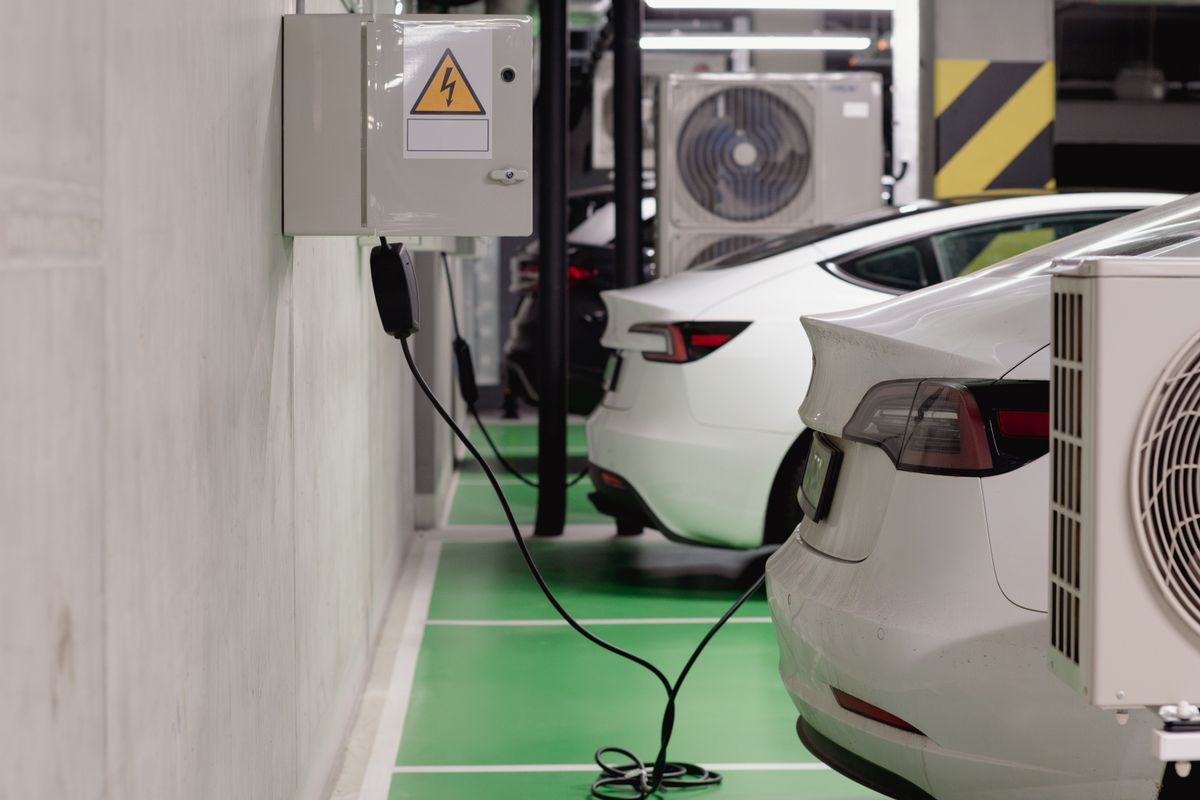
| Home wallbox | 7kW | ~5 to 6 hours | Overnight at home |
| Fast AC | 22kW | ~2 hours* | Car parks, workplaces |
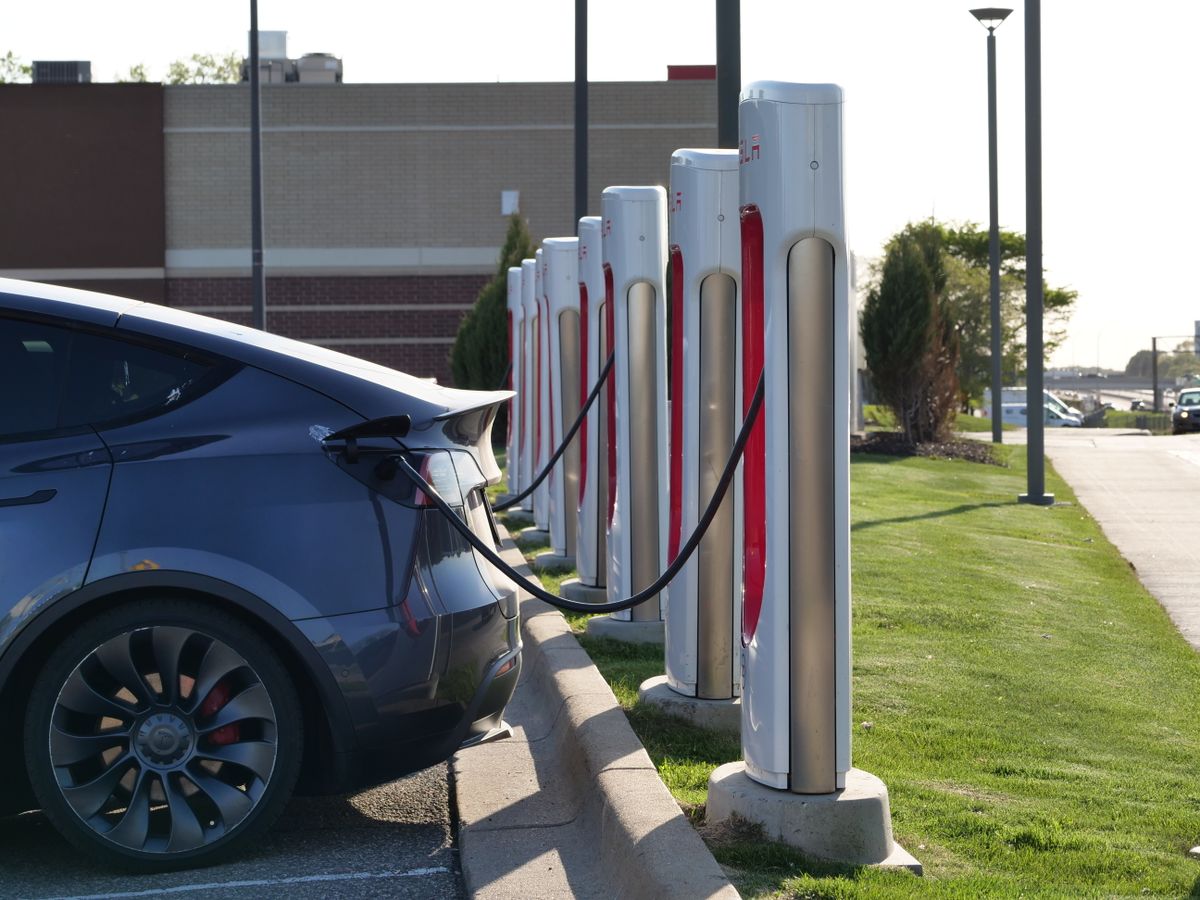
| Rapid DC | 50kW | ~45 to 60 minutes | Trips and top-ups |
| Ultra-rapid DC | 150kW+ | ~15 to 30 minutes | Motorway hubs |
*Only if the car's onboard AC charger supports 22kW; many accept 7kW or 11kW AC, which is the limiting factor. Figures consistent with RAC charging speed guidance, 2026.
What slows charging down
- Cold weather. A cold battery accepts charge more slowly, so winter rapid stops take noticeably longer. Cars with battery preconditioning warm the pack on the way to a rapid charger to counter this.
- High state of charge. Above roughly 80%, rapid charging slows sharply. The last 20% can take as long as the previous 60%.
- Sharing power. Some rapid units split output when two cars plug in.
- The car's own limit. The advertised charger speed is a ceiling, not a promise; your car's maximum DC rate is the real cap.
- Battery health. A degraded pack charges more slowly and holds less. If your times have worsened, our Battery Degradation Estimator shows what is normal for your car's age, and a specialist can measure the real state of health.
Real-world routines, not lab figures
Most UK EV owners barely think about charging time, because the car fills up while they sleep. A 7kW wallbox adds roughly 25 to 30 miles of range per hour, so even a near-empty battery is full by morning, and an overnight off-peak tariff makes it the cheapest option too. Our guide to what charging actually costs in 2026 covers that side of the equation.
Charging time only really matters on long trips. The practical pattern is simple: arrive at a rapid or ultra-rapid hub below 20%, charge to 80%, and leave. Planning around 80% rather than 100% saves more time than any charger upgrade.
If charging seems slower than it should be
A car that suddenly charges slowly at home is often a charger or cable issue; one that charges slowly everywhere may have a battery management or cooling issue that needs a qualified look. Always use a garage with IMI Level 3 or Level 4 EV qualifications for anything touching the high-voltage system. On the directory, HEVRA-approved specialists like J Day Engineering in the South West, Anderson Clark Motor Repairs in the Highlands and St Johns Garage in Worcestershire hold some of the highest Trust Scores we track for diagnostic work. Start at the EV Repair hub to find one near you.
FAQs
How long does it take to charge an electric car at home?
How long does a rapid charge take?
Why does charging slow down after 80%?
Does cold weather make charging slower?
What does charging cost?
Get the exact time for your car
Pick your car from the list, choose a charger, see the time and cost. No sign-up.
Open the Charging Time Calculator →By Ian McDonnell, Co-Founder and Technical Advisor at The EV Pros. Last verified 19 July 2026.
Find a trusted EV specialist near you
Use The EV Pros to compare verified UK EV garages for servicing, repair, MOT, battery work and tyres. Profiles include reviews, Trust Score signals and contact details where available.
Search by postcode →